
-
The Lonestar™
Vendor:Ships in 1-5 Business DaysRegular price From $9.95Regular priceUnit price $1.00 per item -
Industrial Gym T-Nut
Vendor:Ships in 1-5 Business DaysRegular price From $37.09Regular priceUnit price $0.37 per item -
Commercial 2-Hole T-Nut
Vendor:Ships in 1-5 Business DaysRegular price From $2.95Regular priceUnit price $0.19 per item -
Standard 3-Hole T-Nut
Vendor:Ships in 1-5 Business DaysRegular price From $2.95Regular priceUnit price per -
4-Prong T-Nut
Vendor:Ships in 1-5 Business DaysRegular price From $2.95Regular priceUnit price per

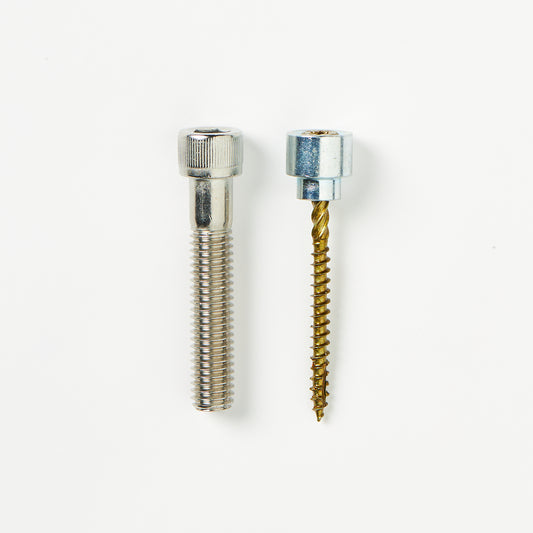

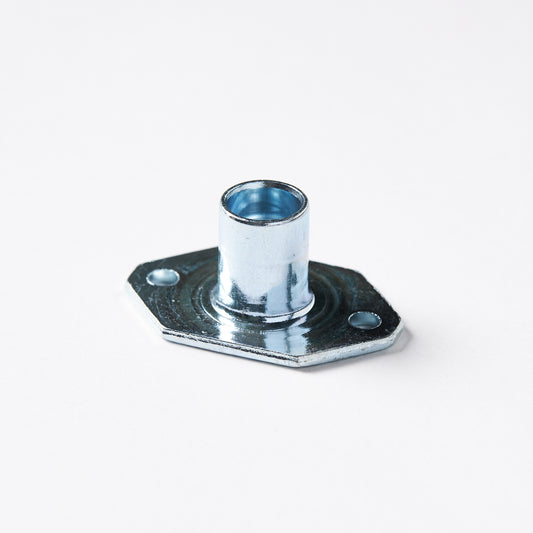

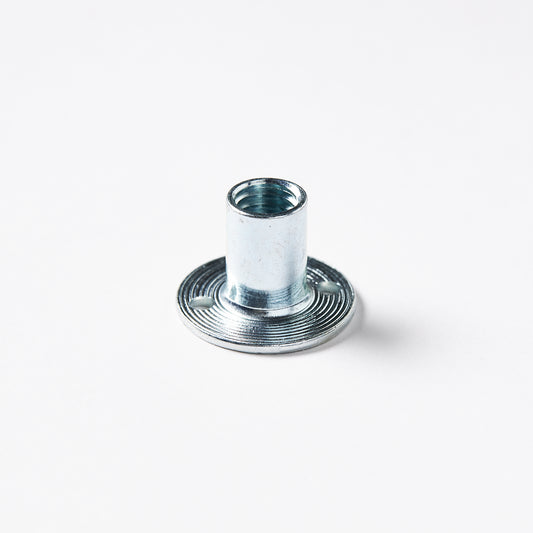


The industry standard for climbing wall T-nuts.
The best t-nuts for climbing walls are 3/8"-16 zinc-plated steel t-nuts, installed in a 7/16" hole in 3/4" plywood. Every t-nut Escape Climbing sells meets that spec, is compatible with all standard climbing holds (ours and everyone else's), and is the same hardware we ship to commercial climbing gyms across the country.
What are the best t-nuts for a climbing wall?
It depends on where they're going:
4-prong t-nuts are the standard choice for home climbing walls. They hammer in fast, cost the least, and hold securely in 3/4" plywood. The only downside is you will tend to have "spinners" by using 4-prong t-nuts.
Screw-in t-nuts are what we recommend for overhangs, roofs, commercial walls, and any panel you won't have back-side access to after it's up. The flange screws directly into the plywood, so the t-nut physically cannot spin or pop out, even under repeated hold changes and high-torque placements.
How many t-nuts do I need for a climbing wall?
Plan on 72 t-nuts per 4'×8' sheet of plywood using an 8" staggered grid — the layout most commercial gyms use. For a home wall where you want denser setting options, a 6"–8" grid works well. A typical garage home wall (2–4 sheets) needs 150–300 t-nuts, which is why we sell in bulk packs.
What size t-nut do climbing holds use?
Climbing holds in North America use 3/8"-16 bolts, so your wall needs 3/8"-16 t-nuts. European holds sometimes use M10 hardware — if you're mixing hold brands, check before you buy, but every hold Escape Climbing makes is 3/8"-16.
Why buy t-nuts from Escape Climbing?
We're a climbing hold company, so our t-nuts are made to actually get used: thick barrel walls that don't strip after years of hold swaps, and clean, centered threads that won't cross-thread your bolts. Cheap hardware-store t-nuts fail exactly where you can't fix them — behind the wall. Ours are the same t-nuts we torque holds into every day.